UDS sealing technology
O-rings and materials

Material selection according to medium, temperature and operating conditions.

An O-ring is a simple sealing element, but its service life depends primarily on selecting the correct material. The temperature ranges below are indicative; final selection must consider the medium, pressure, motion, hardness and exposure time.

  • NBR
  • HNBR
  • EPDM
  • FKM
  • VMQ
  • PTFE
  • FEP/PFA
  • FFKM
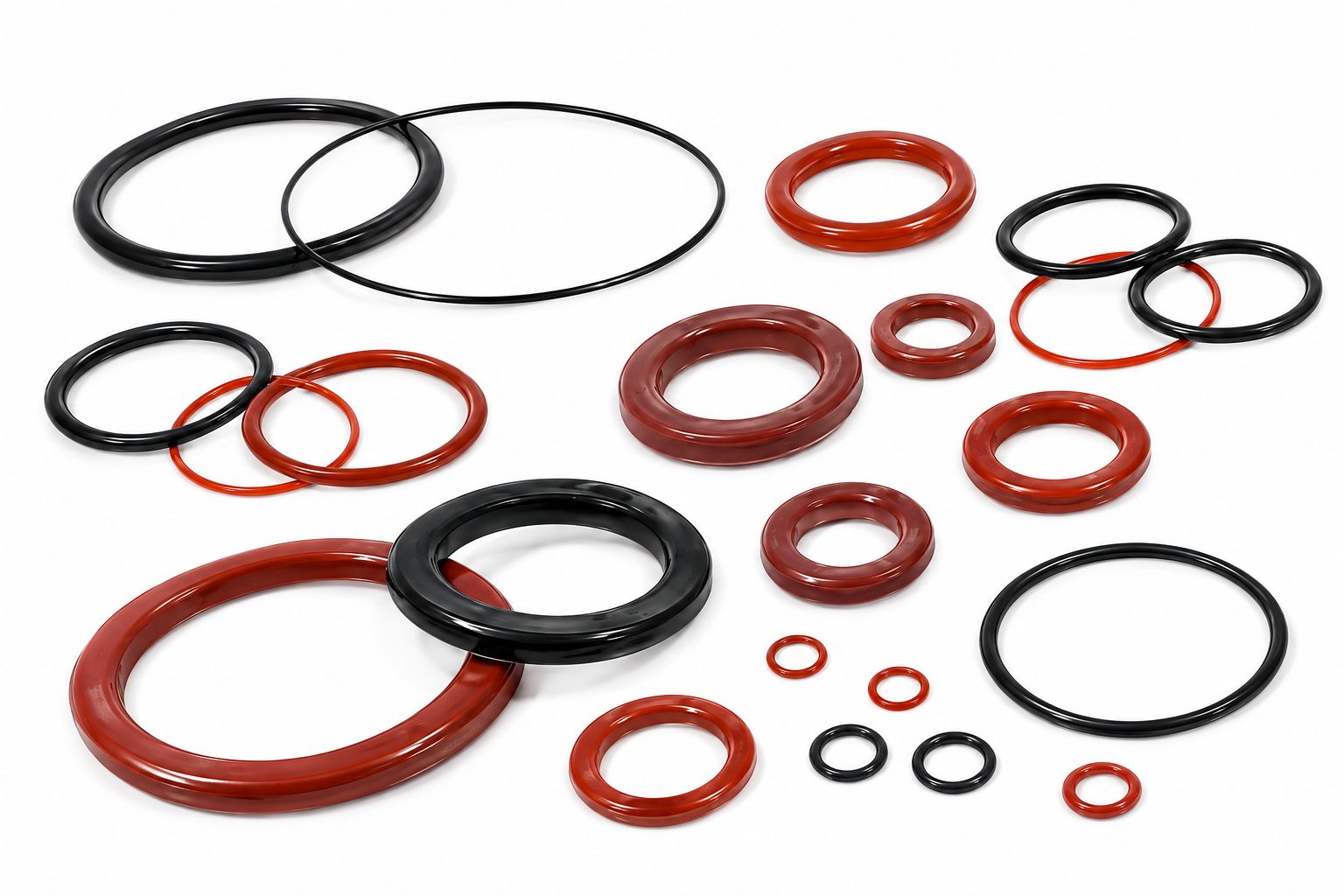
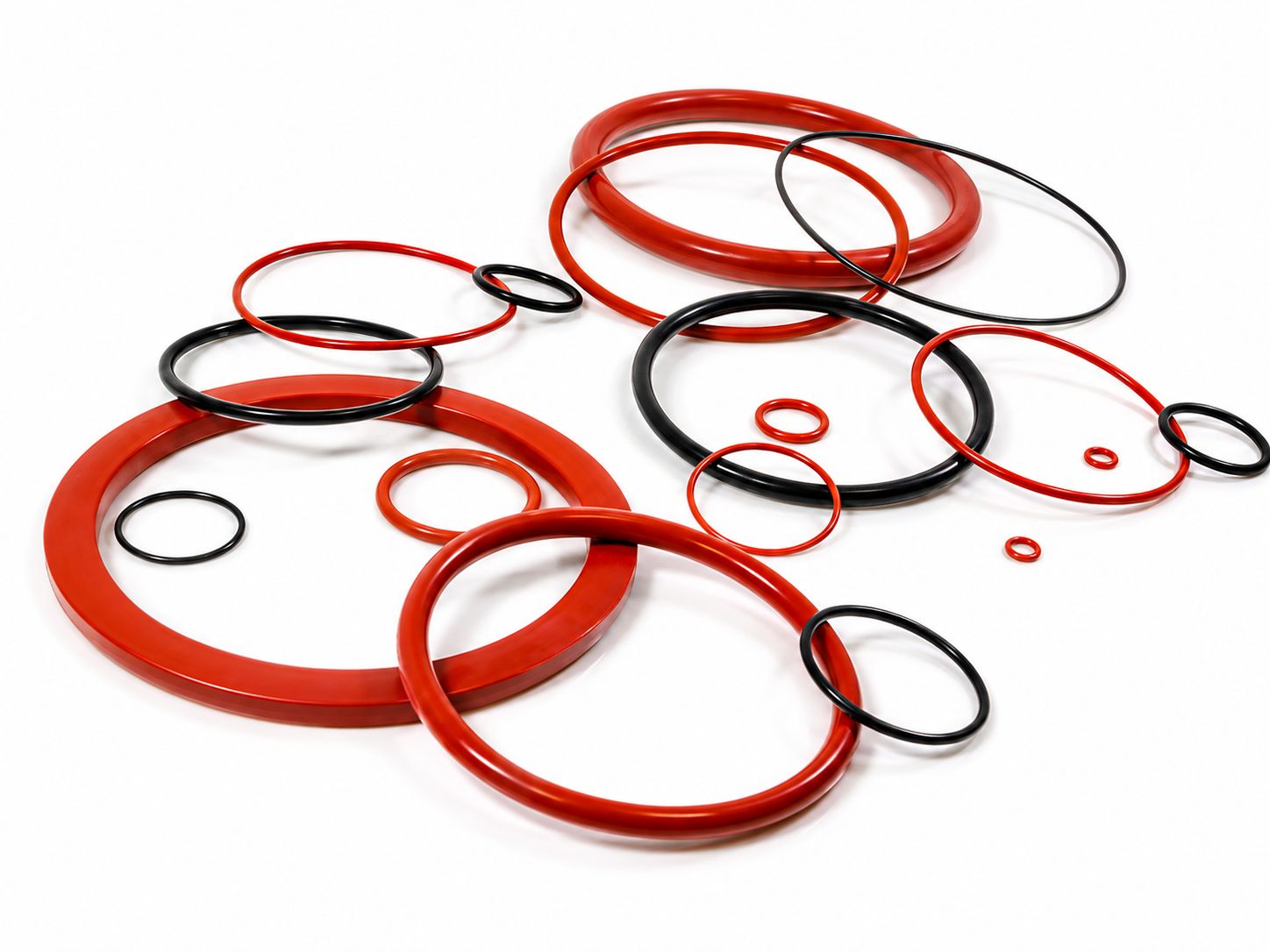
O-rings in various materials
Elastomer materials

Properties of common O-ring materials

The stated ranges are typical values. A specific compound may have different permissible limits.

NBR

Nitrile rubber

A widely used material for mineral oils, fuels, lubricants, water and standard hydraulic applications. Good mechanical resistance and cost efficiency.

Temperature
approx. -30 to +100°C, selected compounds up to +120°C
Advantages
oils, fuels, abrasion resistance, low gas permeability
Limitations
ozone, UV, ketones, esters and some aggressive chemicals
HNBR

Hydrogenated nitrile rubber

An enhanced NBR grade for higher temperatures, mechanical loads and more demanding operating conditions.

Temperature
approx. -30 to +150°C
Advantages
oils, fuels, high strength and ageing resistance
Limitations
some polar solvents and aggressive media
EPDM

Ethylene propylene rubber

Material for hot water, steam, aqueous solutions, glycol-based brake fluids and many acids and alkalis.

Temperature
approx. -50 to +150°C
Advantages
water, steam, ozone, UV, weathering
Limitations
mineral oils, fuels and most hydrocarbons
FKM

Fluoroelastomer

A material with high thermal and chemical resistance, used with oils, fuels, hydrocarbons and many process media.

Temperature
approx. -20 to +200°C, depending on compound
Advantages
oils, fuels, aromatic hydrocarbons, elevated temperature
Limitations
hot steam, ketones and some amines
VMQ

Silicone

An elastomer with a very wide temperature range and good low-temperature flexibility. Used mainly in static applications.

Temperature
approx. -60 to +200°C
Advantages
low temperature, hot air, food applications
Limitations
low abrasion and tear resistance
FFKM

Perfluoroelastomer

A premium material combining elastomer flexibility with very high chemical resistance. Used in the most demanding installations.

Temperature
typically up to +260°C, special compounds higher
Advantages
very broad chemical resistance and high-temperature capability
Limitations
high cost and need for precise compound selection
Fluoropolymers

PTFE and FEP/PFA encapsulated O-rings

Fluoropolymer solutions are selected where standard elastomers swell, harden or are attacked by the medium.

PTFE

PTFE O-rings and rings

PTFE provides very high chemical resistance, low friction and a wide temperature range. However, it has limited elasticity, so it requires a suitable groove design and careful installation.

  • approx. -200 to +260°C
  • very low friction
  • near-universal chemical resistance
  • limited elasticity and shape recovery
FEP / PFA

Elastomer core in a seamless envelope

An encapsulated O-ring combines the resilience of a silicone or FKM core with the chemical resistance of a thin, seamless FEP or PFA envelope. The envelope isolates the elastomer from the medium, while the core provides sealing contact pressure.

  • FEP: continuous service approx. -60 to +205°C
  • PFA: continuous service approx. -60 to +260°C
  • low adhesion and friction
  • static applications and slow movement
FEP/PFA Chem-Ring

Construction, advantages and applications

The information below was prepared from the supplied Vulcan Chem-Ring catalogue.

Main advantages

Chemical and corrosion resistance, a wide temperature range, smooth self-lubricating surface, low friction and reduced product adhesion.

Typical applications

Pumps, valves, filters, pressure vessels, heat exchangers, autoclaves, process installations and vessel covers.

Installation

Surfaces must be smooth and free of sharp edges. The ring should not be bent sharply or twisted; suitable lubricant and gentle heating can facilitate installation.

Open full PDF catalogue
Cryo-Ring™ FEP / PFA

Ring seals
for cryogenic applications

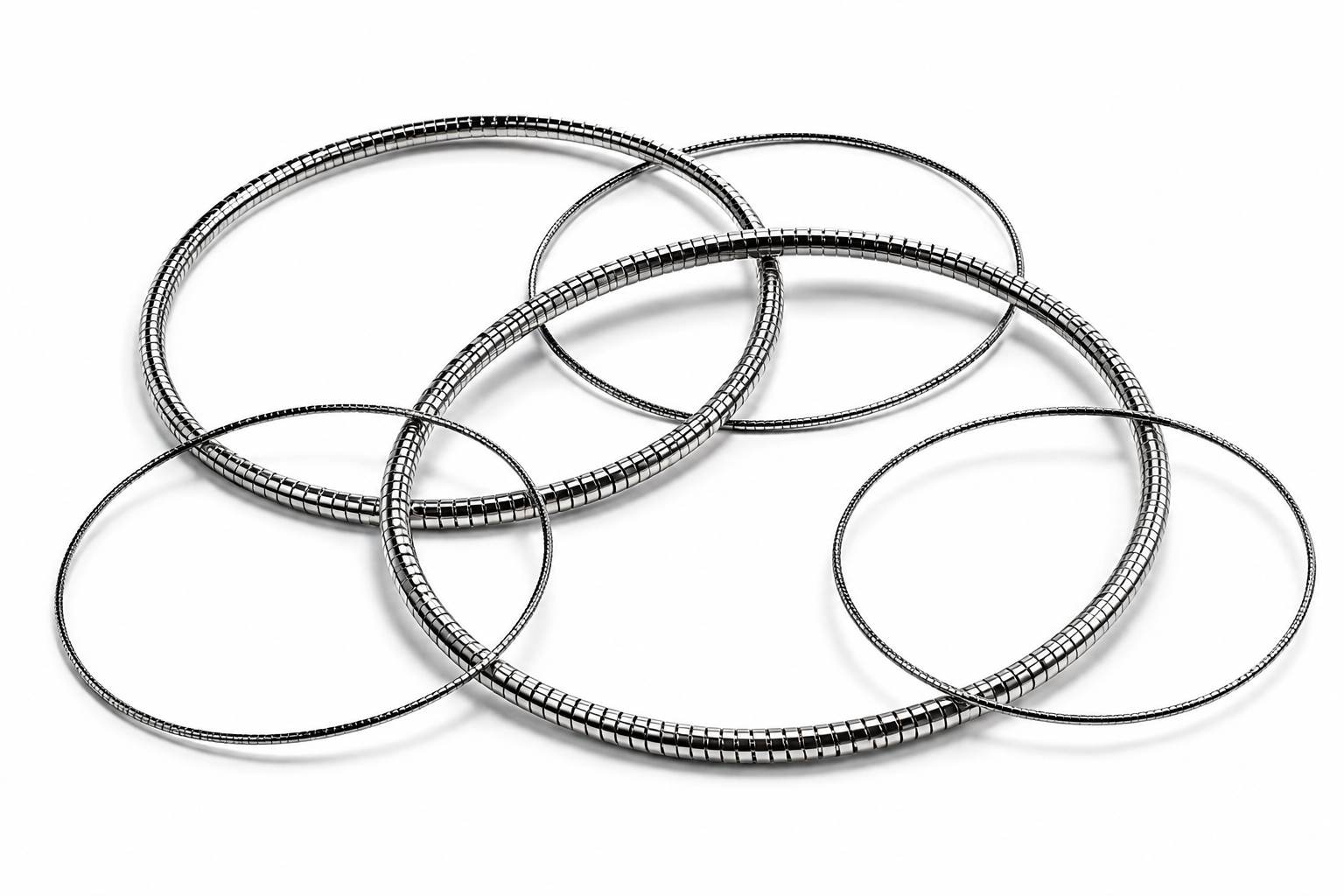
Cryo-Ring™ is designed for very low temperatures, including liquid oxygen and hydrogen installations. Instead of a conventional elastomer core, it uses a helical spring made from 302 stainless steel enclosed in a chemically resistant FEP or PFA envelope.

O-ring selection by material and dimensions

Construction

The seamless FEP or PFA envelope protects the metal core from the medium, while the 302 stainless-steel helical spring maintains constant contact pressure on the sealing surfaces.

Temperature range

FEP: from -250 to +205°C.
PFA: from -250 to +260°C.

Applications

Transport and storage of liquefied gases, food, pharmaceutical and chemical industries, and other installations requiring cryogenic capability.

Key advantages

Stability at extremely low temperatures

  • operating range far below that of a silicone core
  • no cold-flow issue typical of solid PTFE rings
  • available in many diameters, cross-sections and shapes
  • full production traceability and multi-stage quality control
  • materials available for BS ISO 3601-1 / AS 568 sizes
Pressure

Vent holes above 100 bar

For applications above 100 bar, vent holes should be provided in the encapsulation. They reduce the risk of envelope rupture caused by differential pressure.

Selection of design, venting and tolerances should take account of the medium, pressure, temperature and groove design.
Dimensions in mm

Cross-section tolerances

Cross-sectionCross-section tolerance
1,78-0,08 / +0,12
2,62-0,08 / +0,12
3,53-0,08 / +0,15
5,33-0,13 / +0,20
6,99-0,15 / +0,23
8,00-0,16 / +0,24
Dimensions in mm

Inside-diameter tolerances

Inside diameterTolerance ±
12,71–25,400,25
25,41–38,100,30
38,11–50,800,45
50,81–63,500,55
63,51–88,900,61
88,91–101,600,71
101,61–127,000,79
127,01–152,400,94
152,41–177,801,02
from 177.810,50%
Enquiry data

What information is needed to select the correct O-ring?

  • inside diameter and cross-section diameter
  • medium and its concentration
  • minimum and maximum temperature
  • pressure and operating mode: static or dynamic
  • required hardness, standards and approvals
Material selection

Send the dimensions and operating conditions.
We will select the correct material and design.

Temperature and resistance limits depend on the specific compound and operating conditions.
Send enquiry+48 666 747 596